The Giger MD therapy
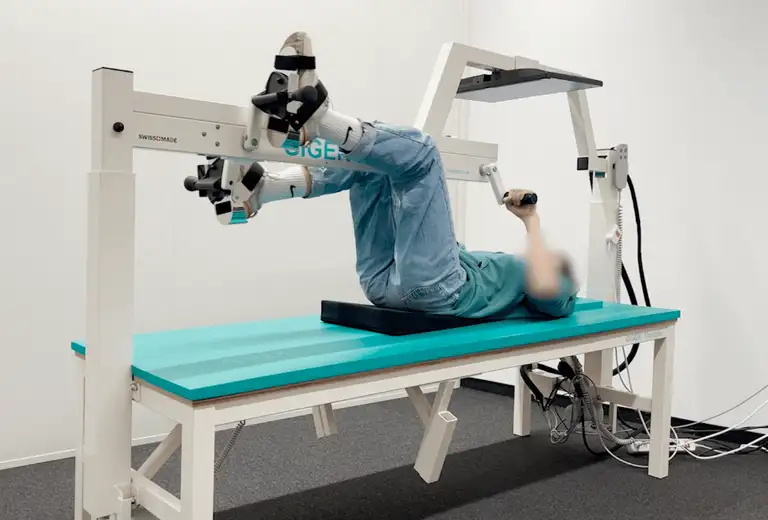
Giger MD therapy is a powerful and effective treatment that can help improve the coordination and organisation of the various sensory and motor inputs in the central nervous system (CNS), using biofeedback technology. It can be particularly useful for restoring the basic structure of the CNS and improving conditions linked to attention disorders and other neurological conditions. As a complement to the Tomatis method, it helps improve its results.
Updated on , a 5-minute read.
On this page
A newcomer to our centre, the Giger MD device is a complementary treatment to the Tomatis method for attention deficit, dyslexia and language disorders.
Below, a teacher's comments at the end of Clara's second term:
“She is getting very good averages in every subject and her progress is impressive! We congratulate her on her results and on the commitment she has shown all term in every area. Clara seems to have gained in confidence. She takes an active part in every lesson, asks questions and asks the adult for help when she needs it.” Read the rest of the testimonial
Giger MD therapy
Giger MD therapy is designed to help improve the coordination and organisation of the various sensory and motor inputs in the central nervous system (CNS), using biofeedback technology. It is based on the idea that the coordinated firing of neurons in the CNS is crucial to the CNS's self-organisation, and that this coordination can be partly lost after an injury or illness. The therapy uses high-tech instruments to help patients relearn precise, coordinated movements, coordinating the phase and frequency of movements to within a few milliseconds, which can help restore the basic structure of the CNS.
When the CNS works properly, it can process and integrate the various sensory and motor inputs efficiently, which can help improve attention. Attention is the cognitive process of focusing selectively on certain stimuli while ignoring others. It involves the ability to filter out distractions and focus on relevant information, which matters for many cognitive and motor tasks.
If the CNS is not working properly, it may struggle to process and integrate the various sensory and motor inputs, which can lead to attention problems. By improving the coordination and organisation of these inputs in the CNS, Giger MD therapy can help improve the overall functioning of the CNS, which in turn can improve attention.
It should be noted that the therapy is mainly used to help people with movement disorders, and that it is not a direct treatment of cognitive functions such as attention. But by treating the underlying movement disorder, the therapy can improve overall cognitive function and, as a secondary benefit, attention.
Hebb's rule
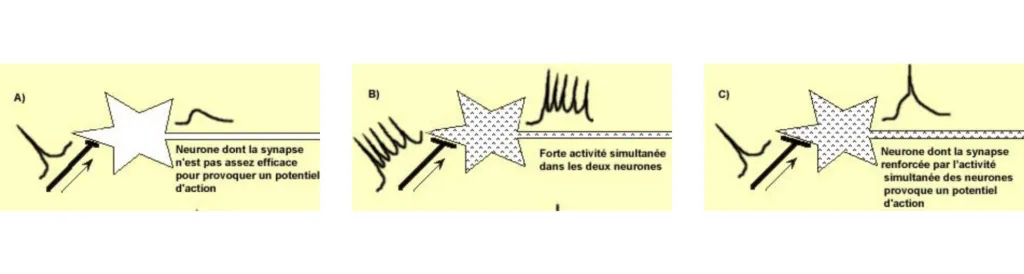
This rule is often summed up as “cells that fire together, wire together”. It suggests that the connection between two neurons (called a synapse) grows stronger when those neurons are activated at the same time. The idea is that the more often neurons are activated together, the stronger the connection becomes.
Hebb's rule is thought to play a part in forming memories and strengthening neural connections in the brain. It rests on the idea that the brain constantly rewires itself according to experience, and that the connections between neurons change according to their patterns of activity.
Overall, Hebb's rule is a fundamental principle of neuroscience that helps explain how the brain changes and adapts in response to experience. It is a key concept in the study of learning and memory, and scientists have researched and debated it for many years.
Why the CNS and attention are linked
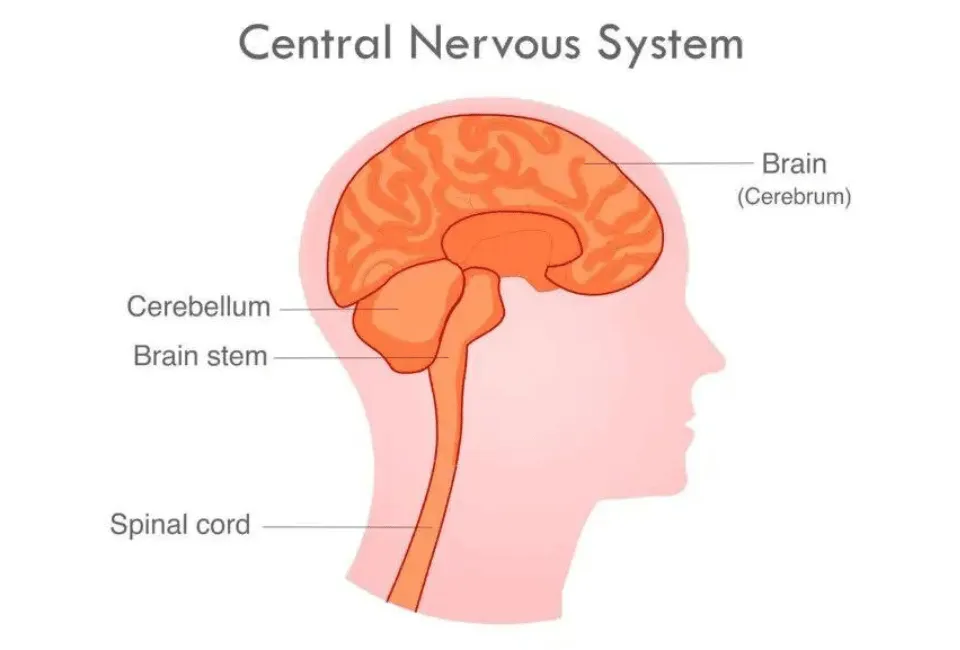
The central nervous system (CNS), made up of the brain and the spinal cord, controls and coordinates the body's functions, including attention. Attention is the ability to focus on one specific task or source of information while ignoring others. It is a cognitive process controlled and coordinated by various regions of the brain.
Several brain regions are involved in attention, including the prefrontal cortex, the parietal cortex and the thalamus. The prefrontal cortex is responsible for executive functions such as planning, decision-making and impulse control, all of which matter for attention. The parietal cortex is responsible for spatial attention, that is, the ability to focus on a specific place or object in the environment. The thalamus acts as a relay between the senses and the cerebral cortex, and helps filter incoming sensory information and route it to the right brain regions.
The CNS also helps regulate the release of neurotransmitters, the chemicals that carry signals between neurons in the brain. These neurotransmitters play an important part in attention by regulating the activity of the neurons involved in attentional processes. Dopamine, for example, which is involved in motivation and reward, can also help improve attention and concentration.
Attention disorders such as ADHD are thought to be linked to abnormal functioning of the CNS, particularly in the brain regions responsible for attentional processes. Research suggests that attention disorders may be associated with neurotransmitter imbalances, abnormal development of certain brain regions, or exposure to certain environmental toxins.
In conclusion, the central nervous system, and more precisely the brain, plays a crucial role in regulating attention. The brain regions and neurotransmitters involved in attention are closely linked and work together to help us concentrate and filter out distractions. Attention disorders may be linked to abnormal functioning of the CNS, which can be treated with a combination of medication, therapy and lifestyle changes.
How the Giger MD works
Giger MD therapy rests on five main principles:
- The CNS is seen as a network of neurons that can be changed through relearning.
- The coordinated firing of neurons is the basis of the CNS's self-organisation.
- Learning processes stimulate and control the formation of new nerve cells, including coordinated rhythmic movements.
- Through relearning, the functions of the CNS can be considerably improved.
- The CNS can integrate, store and retrieve different states of the network, which can be used to reorganise a damaged or injured CNS.
The therapy uses high-tech therapeutic instruments that help patients relearn precise, coordinated movements. These instruments are designed to coordinate the phase and frequency of movements to within a few milliseconds, which can help restore the basic structure of the CNS.
The therapy is usually given over a period of 3 to 6 months, and we have seen significant improvement in patients with coordination problems, speech and language disorders, dyslexia, ADD or ADHD.
You can also read an article about our GIGER MD programme for reducing stuttering.
In their own words
“Kevin was very receptive, even though classical music wasn't really his favourite kind of music.”
“This is the result of your support and your method, which really took a weight off my mind and helped Hakim move forward and gain confidence in himself.”
“My dad and my friends tell me I've become more mature, that I express myself much better, that my questions are more thought through.”